Is It Legal to Sell Cuttings of Patented Plants? (PPAF Explained)
You took a few cuttings from that gorgeous hydrangea, they rooted, and now you have a flat of healthy little plants. Can you sell them at your spring plant sale?
If the plant is a patented cultivar, the answer is usually no, unless you hold a license. This post explains how plant patents work, what “PPAF” on a tag means, how long patents last, and how to check a plant before you put it on your table.
Not legal advice. This is general information to help you ask the right questions. Patent law has nuances, and the facts of your situation matter. For a real decision, talk to a lawyer or contact the patent holder.
What a plant patent is
The U.S. Plant Patent Act of 1930 created patents for new plant varieties. Today the rule lives in 35 U.S.C. § 161: anyone who invents or discovers and asexually reproduces a distinct and new variety of plant can get a patent on it. The USPTO’s general information on plant patents has the official overview.
“Asexually reproduced” is the key phrase. It means propagation that makes a genetic copy:
- rooting cuttings
- grafting and budding
- division
- layering
- tissue culture
Breeders spend years selecting a new cultivar, and nearly all ornamentals and many fruit trees are sold as clones. A plant patent is how a breeder earns back that work: every plant sold is supposed to come from a licensed propagator who pays a royalty.
What the patent holder can stop
Under 35 U.S.C. § 163, a plant patent grants the right to exclude others from asexually reproducing the plant, and from using, offering for sale, or selling the plant so reproduced.
In plain terms, for a backyard seller:
- Rooting a cutting of a patented plant is asexual reproduction, which is exactly what the patent covers.
- Selling those rooted cuttings is covered too.
- Swapping or gifting them doesn’t make it safe. Giving away copies of a patented plant can still infringe.
What is fine: buying a finished, licensed patented plant and reselling that same plant as-is. The royalty was paid when the licensed grower produced it. The problem is making new copies.
What “PPAF” and other tag wording means
Patented plants are usually labeled. Look at the plant tag, the pot, or the grower’s label:
- PP followed by a number (for example “PP12,345”): a granted U.S. plant patent.
- PPAF: Plant Patent Applied For. The application is filed but not yet granted. Once granted, the patent can be enforced, so treat PPAF plants as protected.
- “Propagation Prohibited”, “Asexual reproduction prohibited”, or “Unlawful to propagate”: the grower is telling you directly.
- CPBR or PBR: Canadian or other plant breeders’ rights, for plants protected outside the U.S.
A ™ or ® next to a name is a trademark on the brand, not a patent on the plant. Many popular plants carry both: a patented cultivar sold under a trademarked brand name. When the patent expires, the brand name can stay protected, so you may need to sell the plant under its cultivar name instead.
How long plant patents last
A U.S. plant patent lasts 20 years from the filing date of the application (35 U.S.C. § 154). After that, the cultivar is free to propagate.
That means plenty of older named varieties you see everywhere are no longer patented. It also means that a plant introduced in the last couple of decades very likely still is.
Seeds are different (mostly)
Plant patents cover asexual reproduction. Seedlings grown from seed aren’t clones, so a plant patent alone doesn’t cover them. And most seedlings aren’t true to the parent cultivar anyway, so you couldn’t honestly sell them under that name.
But seed-grown varieties can be protected in other ways:
- Plant Variety Protection (PVP) certificates from the USDA cover sexually reproduced (seed) and tuber-propagated varieties. See the USDA Plant Variety Protection Office.
- Utility patents can cover plants, traits and breeding methods.
Seed packets often print “PVP” or “Unauthorized propagation prohibited”. Open-pollinated heirlooms are generally unrestricted, which is part of why so many backyard nurseries specialize in them.
How to check a plant before you sell it
- Check the tag. Keep tags from plants you buy, and photograph them. If you see “PP”, “PPAF” or “Propagation Prohibited”, stop there.
- Search the cultivar name with “plant patent”. Breeders and brand programs usually list patent numbers on their websites.
- Search the USPTO. Use USPTO Patent Public Search or Google Patents. Plant patents are numbered with a “PP” prefix and usually name the cultivar in quotes.
- Do the math. If you find the patent, its term ends 20 years after the filing date on the patent.
- When in doubt, don’t propagate it for sale. Grow it, enjoy it, and sell something else.
Licensing is possible
Some breeders license smaller growers. If you really want to sell a patented cultivar, contact the patent holder or the brand program and ask about a propagation license. Expect royalties per plant and conditions like official tags. For a hobby-scale seller it’s often easier to buy licensed liners (young plants) and grow them on, which sidesteps propagation entirely.
Patents aren’t the only rule
Plant patents are federal. Separately, most states regulate selling plants at all:
- Nursery licenses. California requires a license to sell any rooted plant. Colorado exempts sellers under $1,000 a year. Washington has a $20 plant-sale permit. Rules vary widely.
- Inspections and pest quarantines, especially for citrus and other regulated crops.
- Invasive and noxious plant lists that ban certain species outright.
Your state department of agriculture is the place to ask. The National Plant Board links to every state’s plant regulatory agency.
How garden.gg handles patented plants
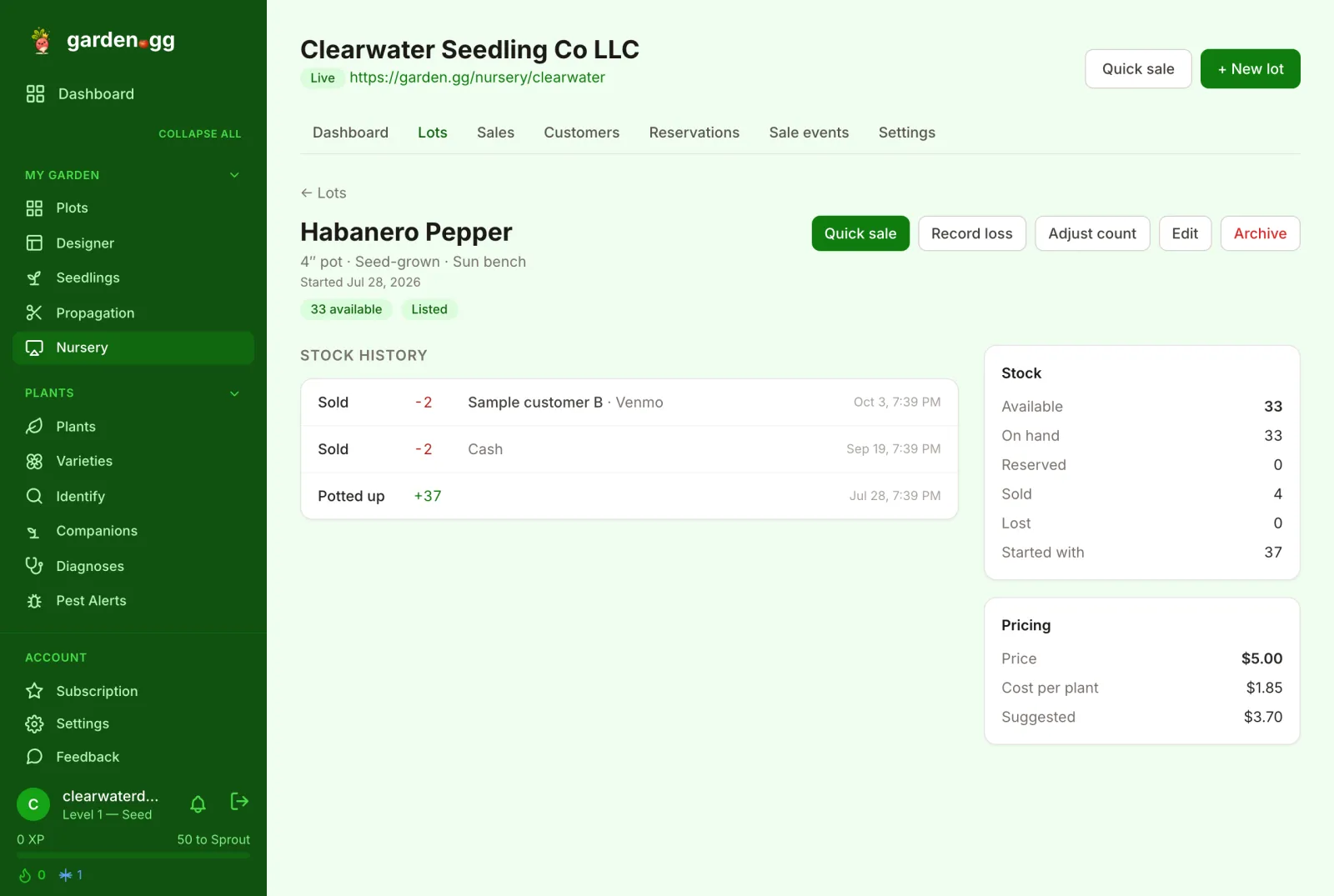
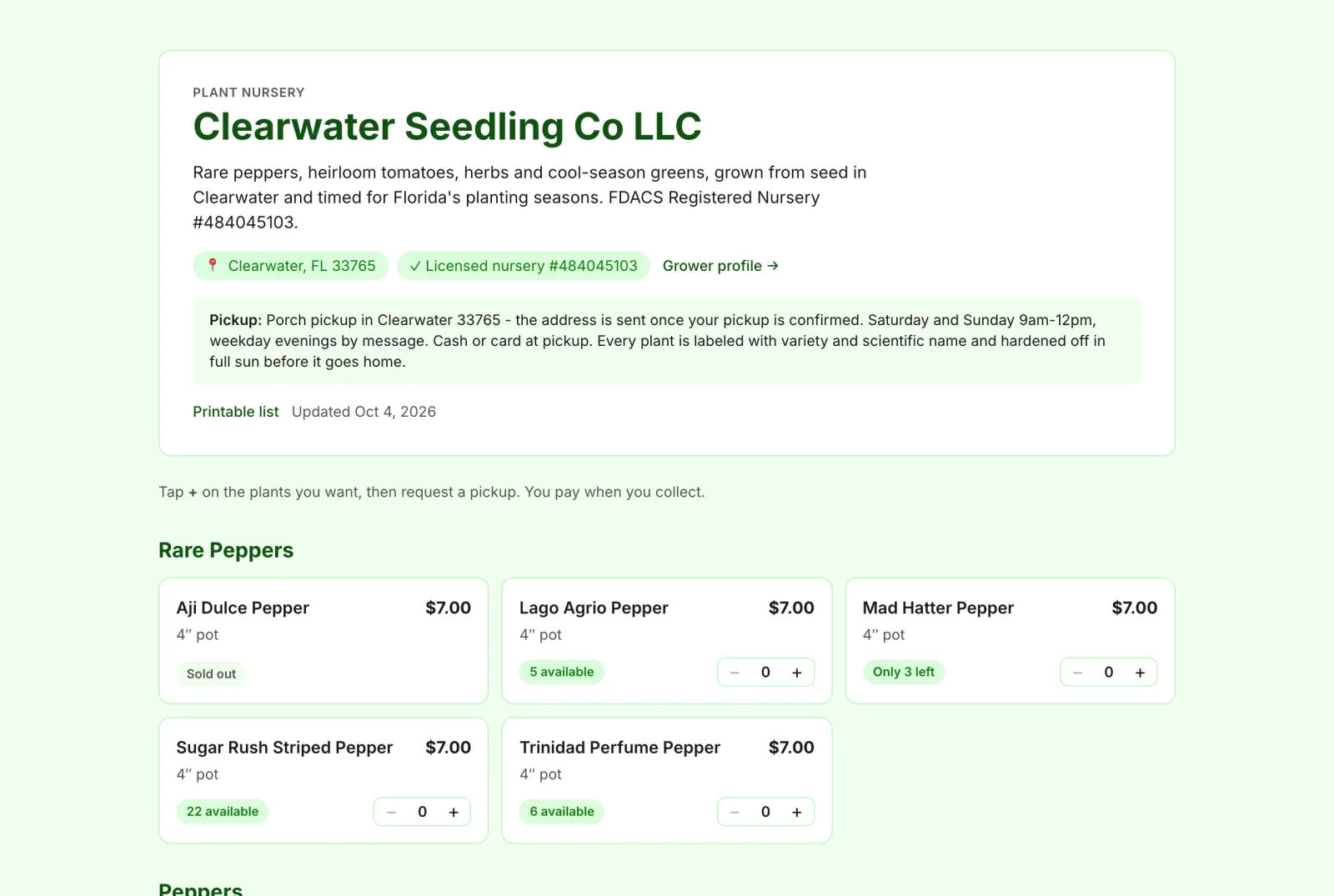
The garden.gg nursery tools include a plant-patent guardrail. If a stock lot is linked to a cultivar flagged as patented or patent pending, garden.gg shows “This plant may be patented” with a short explanation of the Plant Patent Act. Listing the lot on your public availability page requires ticking “I hold a license to propagate this cultivar.” You can always keep tracking it privately.
Bulk actions respect the same rule: if you Make all public, any flagged lot without an attestation is skipped and reported as “needs patent license”.
It’s a warning and an attestation, not legal enforcement. You’re still responsible for what you sell. The lots and pricing guide has the details, and how to run a backyard plant sale covers the rest of the selling checklist. Storefronts are part of the Harvest plan; see pricing.
The short version
- Rooting, grafting or dividing a patented plant and selling, swapping or gifting the copies can infringe.
- PPAF means a patent is pending; treat it as protected.
- Patents last 20 years from filing, then the cultivar is free (the brand name may not be).
- Seedlings aren’t covered by plant patents, but PVP and utility patents can protect seed varieties.
- Check the tag, search the USPTO, and when in doubt, sell something else.
FAQ
Is it legal to sell cuttings of a patented plant?
Generally no, not without a license from the patent holder. A U.S. plant patent gives its owner the right to exclude others from asexually reproducing the plant and from selling or using plants reproduced that way. Rooting a cutting is asexual reproduction, so propagating and selling, swapping or giving away cuttings of a patented cultivar can infringe for the life of the patent. This is general information, not legal advice.
What does PPAF mean on a plant tag?
PPAF stands for Plant Patent Applied For. It means the breeder has filed a plant patent application that hasn’t been granted yet. Once granted, the patent can be enforced, so treat a PPAF plant as off-limits for propagation unless you have a license.
How long does a plant patent last?
A U.S. plant patent lasts 20 years from the date the application was filed. After it expires, the cultivar can be propagated freely, though the variety’s trademarked brand name may still be protected.
Can I sell seedlings grown from seed of a patented plant?
Plant patents cover asexual reproduction, so seedlings are not covered by a plant patent itself. But seed-propagated varieties can be protected another way, through Plant Variety Protection certificates or utility patents, and a seedling usually isn’t the same cultivar as its parent anyway. Check before selling anything under a protected variety name.
Does garden.gg stop me from listing patented plants?
garden.gg warns you. If a nursery lot is linked to a cultivar flagged as patented or patent pending, listing it publicly requires you to confirm you hold a propagation license. You can still track the lot privately. It’s a warning and attestation, not legal enforcement or legal advice.