How to Start a Vegetable Garden in 2026: A Complete Beginner's Guide
Starting a vegetable garden is one of the best decisions you’ll make this year. Fresh tomatoes that actually taste like tomatoes. Herbs for a fraction of grocery store prices. And the quiet satisfaction of eating something you grew yourself.
The good news: it’s simpler than the internet makes it look. You don’t need raised beds, fancy soil amendments, or a master plan. You need sun, dirt, water, and seeds. Here’s how to go from zero to harvest.
Step 1: Choose Your Spot
Your garden needs three things from its location:
Sun (6+ hours/day): This is non-negotiable for vegetables. Track your yard’s sun exposure for a day — that shady corner won’t grow tomatoes no matter how good the soil is. Leafy greens (lettuce, spinach, kale) can handle 4-5 hours. Everything else needs 6-8.
Water access: You’ll water almost daily in summer. A spot 200 feet from your hose means you won’t do it. Close to water = more consistent garden.
Flat-ish ground: Slight slope is fine (helps drainage). A hillside makes everything harder.
Size for beginners: Start with 4x8 feet. That’s big enough to grow real food, small enough to maintain in 20 minutes a day. You can always expand next year.
Step 2: Decide on Garden Type
In-Ground
Best for: Large plots, established yards with decent soil
- Cheapest to start — just dig
- Requires soil testing and amendment
- More weeding
Raised Beds
Best for: Poor soil, bad drainage, accessibility
- Better soil control — you fill it with exactly what you want
- Less bending — great for backs and knees
- Cost: $50-150 for materials
Containers
Best for: Apartments, patios, renters
- Grow on any paved surface with sun
- Each container is its own mini garden — fill it right with a per-plant container soil mix
- Need more frequent watering (daily in summer)
Beginner recommendation: If your yard has decent soil, start in-ground. If it doesn’t (clay, rocks, compacted), build one 4x8 raised bed.
Step 3: Build Your Soil
Soil is the whole game. Good soil = healthy plants that resist pests and disease. Bad soil = a season of frustration.
For in-ground: Get a soil test ($15-20 from your county extension office). It tells you pH and nutrient levels. Most vegetables want pH 6.0-7.0. Amend with compost — 2-3 inches mixed into the top 8 inches.
For raised beds: Fill with a mix of:
- 60% topsoil
- 30% compost
- 10% perlite or vermiculite (drainage)
Don’t use pure potting mix in raised beds — it dries out too fast and is expensive to fill a 4x8 bed.
For containers: Use quality potting mix (not garden soil, which compacts in pots). Add slow-release fertilizer at planting time.
Step 4: Pick Your First Crops
Here’s the beginner mistake: planting 15 different things because the seed rack looked exciting. Start with 5-7 crops max. These are the easiest:
The Beginner Five (almost impossible to fail)
- Lettuce — Direct sow, harvest in 30 days, succession plant all spring
- Radishes — Ready in 22 days. Instant gratification for new gardeners.
- Bush beans — Direct sow after frost, almost no care needed, heavy producer
- Zucchini — One plant produces more than you can eat. Seriously, one.
- Cherry tomatoes — More forgiving than slicing tomatoes. Buy transplants, not seeds.
Ready for a Challenge?
- Peppers — Need heat and patience (70+ days to harvest)
- Cucumbers — Easy but need a trellis
- Herbs (basil, cilantro, chives) — Essential for cooking, tiny space
Skip These Year One
- Corn (needs a lot of space for pollination)
- Celery (fussy about everything)
- Cauliflower (difficult even for experienced growers)
- Melons (need long hot season and lots of space)
Step 5: Know Your Timing
The single most important piece of information for a new gardener: your last frost date.
Everything else flows from this:
- Start tomatoes indoors 6-8 weeks before last frost
- Direct sow beans 1 week after last frost
- Plant peas and lettuce 4-6 weeks before last frost
Find your zone’s complete schedule: Planting Calendar by Zone
| Zone | Last Frost | First Crops Outdoors |
|---|---|---|
| 4 | May 1 | Peas, lettuce in mid-April |
| 5 | Apr 15 | Peas, lettuce in March |
| 6 | Apr 1 | Most cool crops in March |
| 7 | Mar 15 | Cool crops in February |
| 8 | Mar 1 | Warm crops in March |
Step 6: Plant
Transplants (from a garden center): Dig a hole twice the width of the pot, same depth. Pop the plant out, loosen root-bound roots gently, drop it in, fill, water deeply.
Seeds (direct sow): Follow the packet. General rules:
- Plant seeds 2-3x deeper than their diameter
- Water gently after planting — don’t blast them
- Thin seedlings ruthlessly — crowding kills yield
Spacing matters. The #1 beginner mistake is planting too close together. It feels wasteful to leave gaps, but those plants need room. Check our raised bed layout guide for spacing by crop.
Step 7: Water (the Most Common Mistake)
How much: Most vegetables need 1 inch of water per week. In summer heat, that might mean daily watering.
How to check: Stick your finger 2 inches into the soil. Dry? Water. Moist? Wait.
The rules:
- Water the soil, not the leaves (wet leaves = fungal disease)
- Water deeply and less often, not a little bit daily
- Morning is best. Evening leaves moisture on leaves overnight.
- Mulch 2-3 inches of straw or wood chips reduces watering by 50%
Step 8: Feed
Most vegetable gardens need fertilizer. Compost is the best all-purpose option — side-dress plants with a handful every few weeks.
For heavy feeders (tomatoes, peppers, corn), use a balanced organic fertilizer (like 10-10-10) once a month during the growing season.
Signs of nutrient deficiency:
- Yellow lower leaves = nitrogen deficiency
- Purple-tinged leaves = phosphorus deficiency
- Brown leaf edges = potassium deficiency
Step 9: Deal with Problems
Pests: Start with identification, not pesticides. One aphid isn’t an emergency — a colony is. Handpick larger pests (hornworms, squash bugs). Use neem oil as a broad organic option.
Disease: Prevention > treatment. Space plants for airflow, water at soil level, rotate crops annually, remove diseased plant material immediately.
Weeds: Mulch prevents 80% of weeds. Pull the rest when they’re small — weekly weeding takes 10 minutes. Monthly weeding takes an hour.
Step 10: Harvest
This is why you’re here. General rules:
- Pick often. Most plants produce more when you harvest regularly. A picked zucchini plant makes more zucchini.
- Pick early. Zucchini at 6 inches tastes better than at 18 inches. Beans are best before seeds bulge.
- Pick in the morning. Vegetables have the highest water content and crispest texture before the afternoon heat.
What to Do With Your First Harvest
Seriously — write it down. How much did you harvest? From which plant? On what date? This isn’t busywork — it’s the data that makes next year’s garden twice as good.
After your first season with notes, you’ll know:
- Which varieties performed best in YOUR soil and climate
- Whether you planted too much of one thing (nobody needs 40 zucchini)
- What succession planting would have filled the mid-summer gap
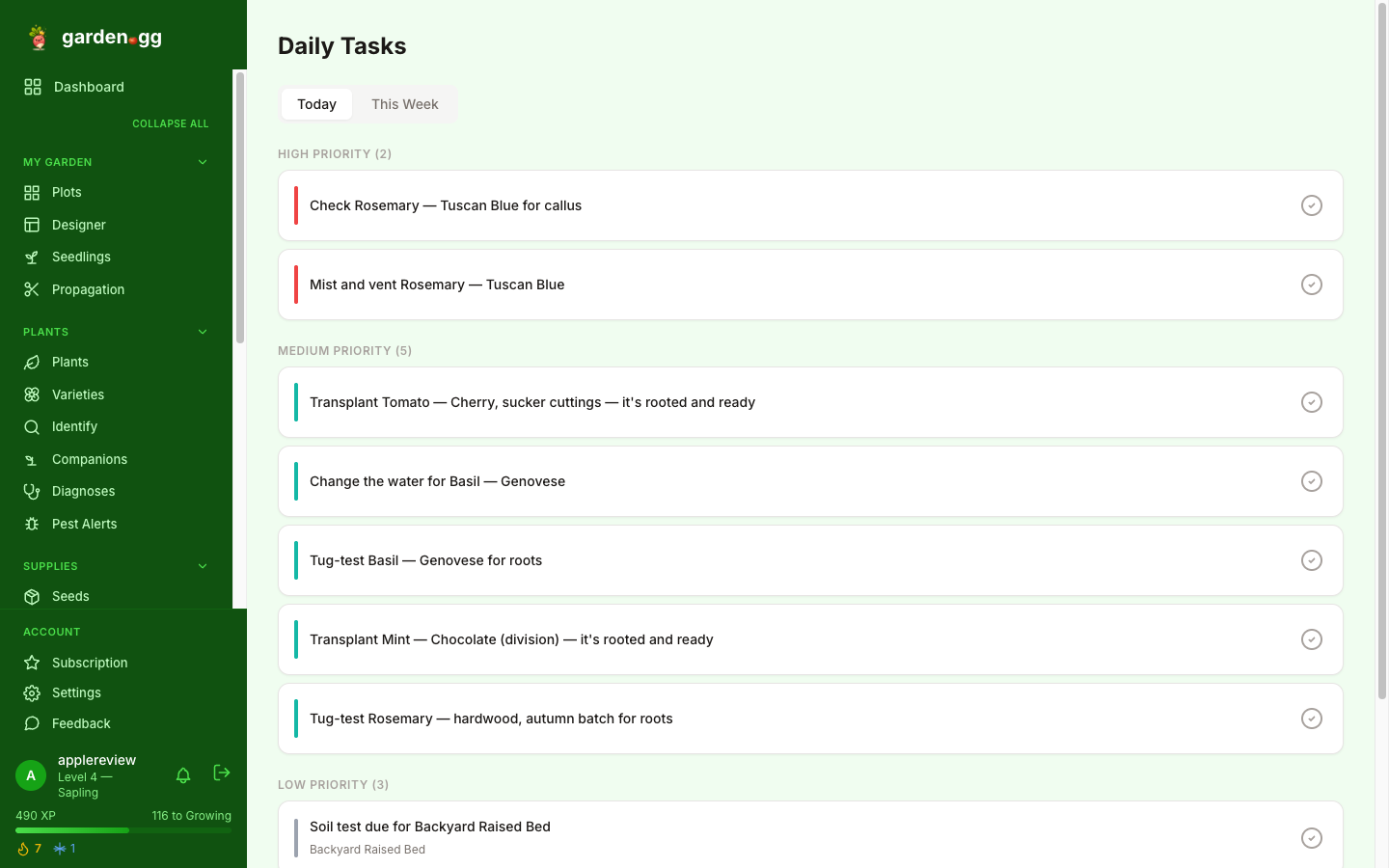
Track your first garden from seed to harvest with Garden.gg — free garden planner with planting calendars, harvest tracking, and AI plant identification. No experience required.